6.You can’t use a claim to support a claim, can you?
Introduction
Watershed Perspectives is a website where I practice using research models as lenses on everyday experiences. Over time I’ll introduce a small ecosystem of research models. The one constant model in action will be Cabrera & Cabrera’s DSRP Theory. DSRP Theory argues that humans make meaning by organizing information. DSRP research finds that that organization uses 4 patterns (D, S, R and P), 8 elements and 3 dynamics.
I am trying to make my posts:
Accessible to readers with no background in Systems Thinking’s DSRP
Allow for reflection on DSRP practice beyond beginner level
Opportunities to challenge my own visual-spatial skill at capturing the organizational footwork of DSRP-483.
DSRP Study 6: Reads / Mechanics in Focus
My previous posts have introduced the patterns: Distinctions, Systems and Perspectives. In this study, I’ll add the Relationship pattern. I’ve waited on the R pattern because I think it can be a bit harder to encapsulate in language, especially written language.
Each pattern is made up of 2 elements (Equality Dynamic)
Distinctions = identity + other
Systems = part + whole
Relationships = action + reaction
Perspectives = point + view
Relationships are created by interactions between elements
Relationships are systems in themselves with parts
Real World Example
In my last post I talked about a former student Ian, taking the air out of a conflict by calmly using the phrase, “That’s just a claim.” In that instance, Ian transferred his learning from one domain to another.
Not long after Ian introduced the phrase “That’s just a claim” as a counter to hallway drama, I had his class start reading a non-fiction book. The book was Red Scarf Girl, By Jiang Ji Li. In Red Scarf Girl, thirteen year old Jiang Ji Li narrates her experience of the Chinese Cultural Revolution (1966-1976). I was excited to read the book for a couple reasons.
I’d studied this period of Chinese History in depth as an Asian Studies major
I really wanted to use a text written in first person perspective.
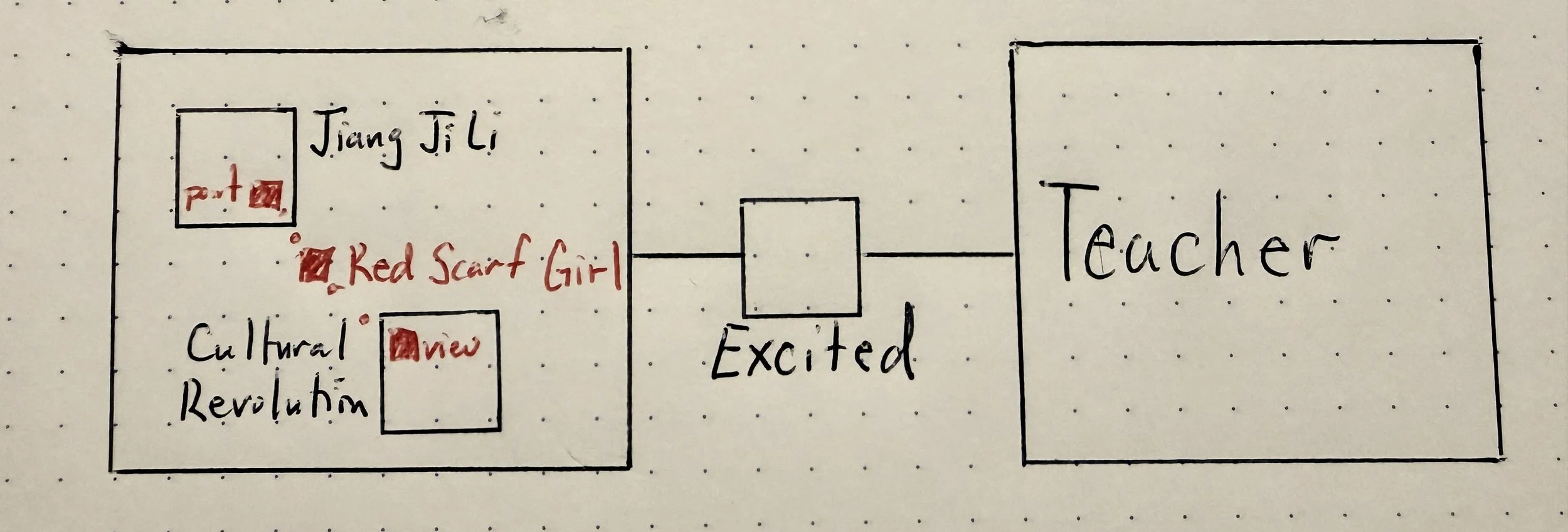
Map 1: My relationship with the prospect of teaching a 1st person perspective on the Chinese Cultural Revolution. At first I was going to organize this information as a perspective on a perspective. Mapping my thoughts back then though, this structure seems more accurate.
Most students engaged whole heartedly with the text from the start. Jiang Ji Li narrates the story paying close attention to her social experiences. Those social experiences helped my students develop a solid understanding of the personal plot line in the story. From there, most students were confident and curious. They asked questions about the language, history and cultural aspects that they didn’t understand. All in all, the book was as perfect a challenge for this group as I could’ve hoped for.
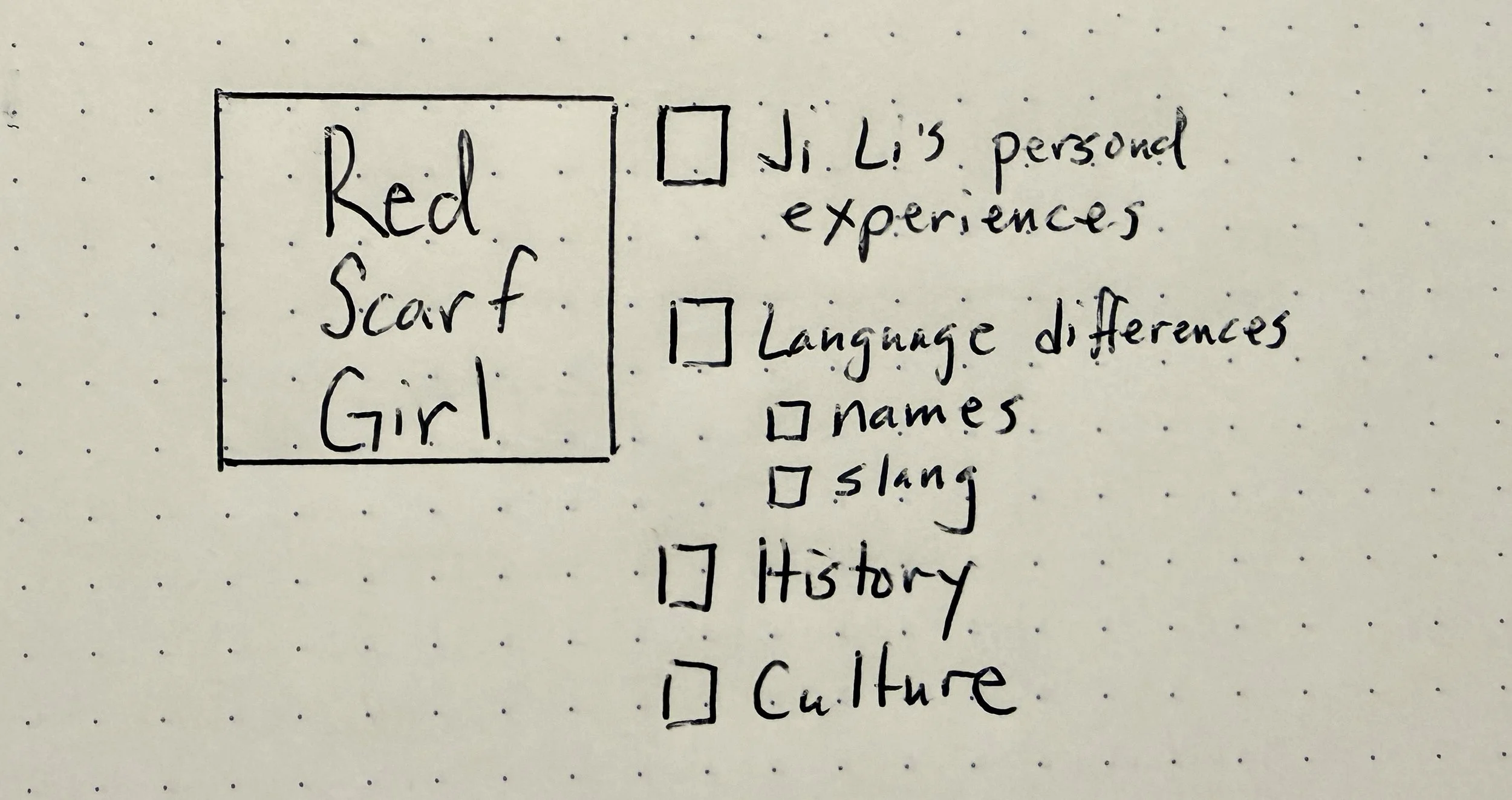
Map 2: A map of the book, Red Scarf Girl as a system with parts.
As we read the story we would process in small and large group discussions. Then I would give the students short written assignments. For these written pieces, I continued to refer to our argument model that I mentioned in my last post.

Map 3: I referred to a poster something like this to scaffold writing assignments. Our class discussions made it clear that claims must be supported by evidence.
Not too far into this unit, middle schooler Katie asked a question in a whole group discussion. “Mr. Hathaway, Du Hai is using a claim to support a claim here. You can’t do that, can you?” I stopped in my tracks and asked Katie, “Show me the part you are talking about.” She showed me, and then we read it over again silently and then out loud as a whole class. I agreed with Katie on both counts. Du Hai, another 13 year old in confrontation with Ji Li, was supporting a claim with another claim; and no, you cannot do that. That question carried our discussion through the rest of the period.
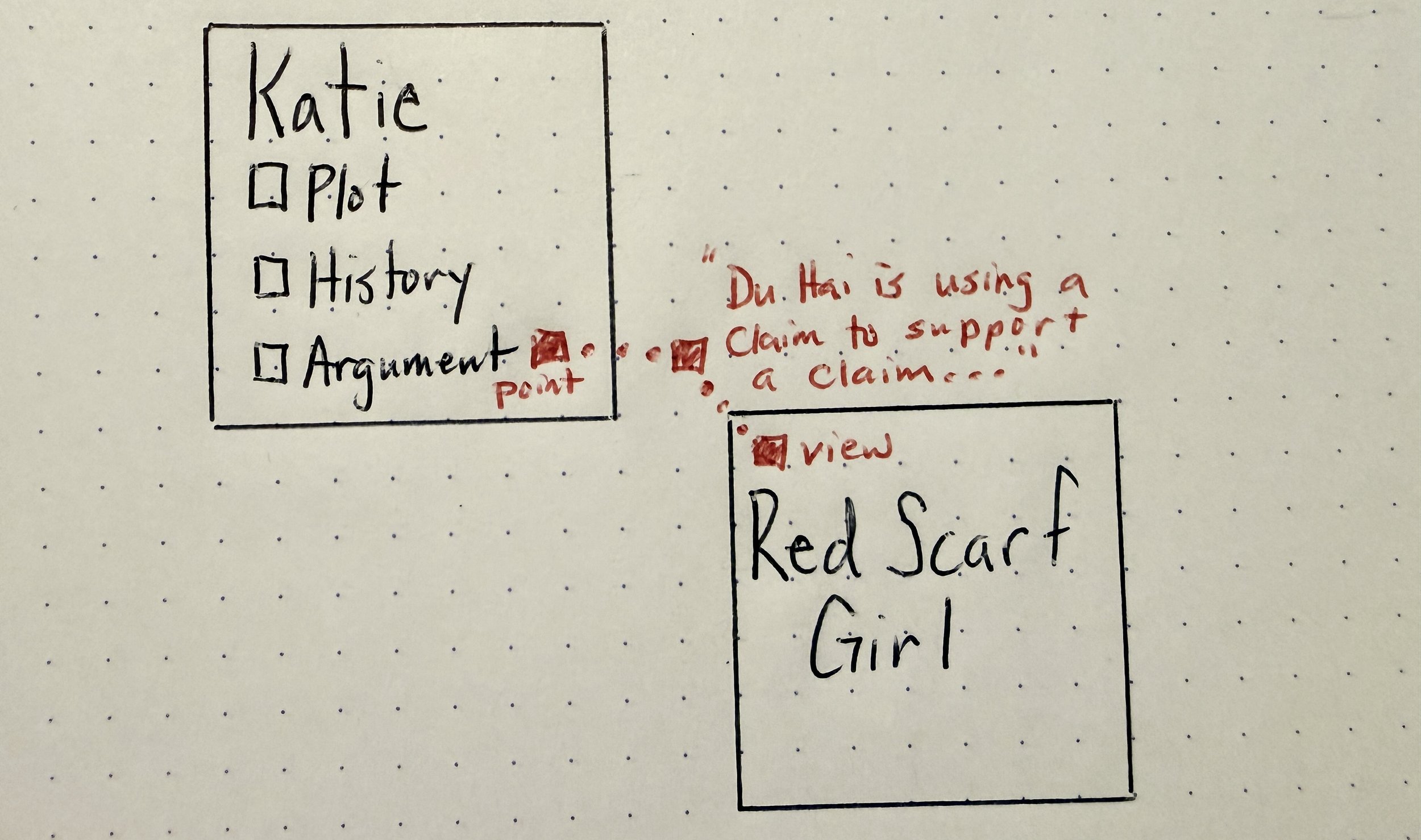
Map 4: Katie took our argument system and turned it into the point of a perspective. Argument became a powerful and transferable lens. She was building on what Ian had done in the hallway when he dismissed social comments that lacked evidence. Though this was a crystallization moment for me, I was still using rudimentary DSRP. Because of this, Argument was the primary explicit model we were aware of, and DSRP structures were secondary and faded in and out of our awareness. I was constantly referencing DSRP patterns, but not fluently considering elements other than part-whole and identity / other.
For the remainder of our time studying Red Scarf Girl, we spent one day modeling the history, zooming out from some part of the text and talking about it from a wider historical context. The next day we analyzed specific arguments being made by people in the story. Where were characters just stringing together claim after claim? Who actually used observable evidence to support their claims? Which characters seemed more reliable and why?
For the rest of that that day, week and year, as the students started to transfer using argument as a point in a perspective, I was learning how to do the same thing right along side them. If I was leading them as a teacher, I was leading them by trying to understand all the perspectives in the room, before we settled on what we thought was the most accurate mental model. Note: If you’ve read all the posts so far, this example happened before but in the same year as the examples in posts 1 and 2.
In all my years as a human being, studying argument with this group of kids, using this book, was as dynamic a group learning experience as I’ve ever been a part of.
Some Updates Since
We made one powerful adaptation to this model by the end of that year. We added qualifier (to the claim) as a part to our argument model. Any claims without qualifiers were absolute and suspect. This addition contributed to three positive outcomes:
Some students who previously struggled to write, found it much easier to follow a qualified claim with evidence in writing. I hypothesized that when students followed an unqualified claim with evidence, they could implicitly see the contradictions/holes created when perspectives changed.
Qualified claims made it easier for many students to distinguish claims from evidence.
When people qualify their claims they make the perspective pattern more noticable, even it it is just implicit.
Unfortunately, we got stuck here and stepped back from this argument model after a few years. Looking back, a big problem was that we had an implicit understanding of what Cabrera now calls the Love Reality Loop, but not an explicit model for representing it during iteration and communication. This gap resulted in a variety of stressors depending on the people involved, these stressors eventually wore us down.
An additional and related problem- we had a lot of success using argument as the point in a perspective. These successes led to our overvaluing and overusing argument as the point in a perspective. This was not a problem in my original classes when our confidence was balanced by curiosity and learning. In my experiences, listening carefully to independent minded early teens provides some communal immunization from single perspective thinking.

Map 5: A simple action-reaction relationship. The success in this instance was our using argument as the point on a view in perspectives. Reorganizing this map is a useful lead in to simultaneity practice. 1. I have modeled a perspective here as a relationship. 2. The action here could become a reaction, the reaction an action…
We got stuck due to other factors as well, as can happen in all complex adaptive systems. I’ll try to get to some of those in later posts.
Time for a break. Rooting for you!